
Author: Miriam Cullen
Date Posted: August 17, 2026
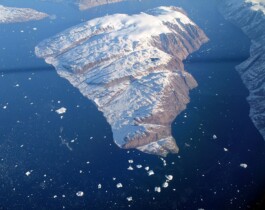
© Túrelio (via Wikimedia-Commons), 2006 / Lizenz: Creative Commons CC-BY-SA-2.5
When President Trump restated his goal to ‘acquire’, ‘buy’, ‘own’, or somehow annex Kalaallit Nunaat / Greenland in January 2026, journalists were abrim with questions. Could the US buy Greenland? And could Denmark sell it? Would Greenland have to consent? Could sovereignty simply be transferred? These questions set the tone for much of the legal commentary that ensued and revealed more than curiosity alone. It exposed the persistence of older legal imaginings in which territory remains a transactional object of international law, and the people inhabiting it are left to endure the consequences of decisions taken by states.
The repeated response that Greenland ‘is not for sale’ was politically effective but legally incomplete because it implicitly accepted the premise that Greenland could be for sale at all. Sovereignty over populated territory cannot be understood as an object of interstate disposition, divorced from the people affected. Human rights law has altered the legal parameters of territorial change not only through the doctrinal refinement of avenues for so-called ‘external’ self-determination (broadly, the right of a people to freely determine their political status and establish their own sovereign state) but also through contemporary understandings of individuals and Indigenous Peoples as rights holders under its auspices.
An Outdated Logic
The ease with which political leaders reverted to the language of ‘ownership’ and disposition of territory – even in opposing it – demonstrates how deeply embedded certain assumptions remain within legal and political thought. The abrupt reversion to the rhetoric of a bygone status quo, forces one to consider the questions asked in Bandung in 1955, and pondered by scholars in the decades since: whether the ‘postcolonial’ world can truly ‘deploy for its own purposes the law which had enabled its suppression in the first place?’ (Anghie, p. 8).
For Kalaallit Inuit (Inuit of Greenland), as well as for other Indigenous Peoples, imperialist systems of territorial division, grounded in the doctrines of discovery and terra nullius, facilitated colonial control over people, place, and the relationships between them. In 1933 in its Eastern Greenland decision, the PCIJ recognised Danish sovereignty over Greenland based on Denmark’s establishment of settlements since 1721, notwithstanding that Kalaallit Inuit had occupied Greenland for millennia before. Inuit were visible but subjugated in the decision, referred to peripherally only as subjects of one or other colonial order, not as rights-bearing subjects themselves, nor were they represented in the proceedings. They were also not consulted in the negotiations for the 1941 or 1951 defence agreements between the US and Denmark, which facilitated US military use of Greenland (though Inuit and Danish leaders in Greenland endorsed a course of action in the context of war in 1941, they were not involved in the negotiations).
The 1951 agreement ultimately led to the May 1953 forced relocation of people living in the settlement of Uummannaq (Thule district) to make room for the extension of the US military base. The entire population of Uummannaq was relocated 150 kilometres north, with only a few days’ notice, without any compensation, and with no familiarity with the new hunting and fishing grounds. These events reflected a system of international law that, at that time, routinely facilitated the dispossession and disruption of knowledge, home, dignity, and kin.
Since the sale of the continental holdings of ‘Danish India’ in 1845, the ‘Danish Gold Coast’ in 1850, the ‘Danish West Indies’ in 1916 (notably with a clause that ‘America will not object to the Danish Government extending their political and economic interests to the whole of Greenland’) and the PCIJ decision in 1933, the law has evolved. Today it is obvious that any legal analysis of this topic that begins and ends with the consent of Denmark ignores the legal personality of Greenland and the collective rights of Inuit as a People under international law. President Trump’s posturing obviously triggers the rules of territorial acquisition and (legal) decolonisation. However, the seriousness of the threat does not suspend the applicability of other rules of international law, including human rights obligations. The right to self-determination is fundamental, but also just one brick in a wall of international human rights law that impedes the application of sales logic to territorial sovereignty. Self-determination must be viewed alongside and in interdependence with the broader suite of human rights.
Rights Holders and a Relational Understanding of Self-Determination
The adoption of a sales discourse, even if only hypothetical, makes invisible the legal rights and personhood of the people whom such decisions affect most. Lands and territories are not merely an object of sovereignty, but a lived legal (as well as physical and spiritual) space structured by the rights of those who inhabit it. In Greenland, where approximately 88 percent of the population are Inuit, this distinction is not abstract.
Any attempt to maintain a hard line between internal self-determination (a people's pursuit of its political, economic, social and cultural development within the framework of an existing state) and external self-determination is a conceptual and legal oversimplification that could be misleading. To hold a rigid divide between the two is ‘inherently incapable of capturing the complexities of self-determination’ (Sparks, p. 39). That is not to suggest there is no need for each category, but rather to assert that they are relational, and a thorough assessment of the applicable law ought to evaluate both, including their connection with each other.
Self-determination is indispensable for the enjoyment of all other human rights, in that it conditions their meaningful exercise. This is particularly so for Indigenous Peoples, for whom land is often not (only) an economic asset. The right to culture, for example, has been understood to expressly entail a right to access and use lands, territories and resources, to ensure ‘the survival and continued development’ of cultural identity. In Greenland, questions of territorial governance are inseparable from Inuit cultural continuity and survival, which is deeply connected to (that specific) place in nuanced, traditional and contemporary ways. These interdependencies extend beyond cultural rights alone. The protection of land, territories and resources is also ‘... necessary to guarantee other rights of indigenous peoples, including the rights to life, culture, dignity, health, water and food’.
The Indigenous and Tribal Peoples Convention, 1989 (No. 169) (ILO 169) (to which the Kingdom of Denmark is a party) as well as the United Nations Declaration on the Rights of Indigenous Peoples (arts 25–28) recognise Indigenous Peoples’ right to and relationships with land and territory. Regional courts and UN bodies have acknowledged that Indigenous Peoples who have been deprived of their lands, or lost possession of it, without their free and prior consent after a lawful transfer to third parties ‘are entitled to restitution thereof or to obtain other lands of equal extension and quality’. The Kingdom of Denmark is a party to ILO 169 and has issued a declaration stating that the ‘Inuit of Greenland’ are the only Indigenous People within the Realm. Article 7 of ILO 169 provides that Indigenous Peoples ‘shall have the right to decide their own priorities for the process of development as it affects their lives, beliefs, institutions and spiritual well-being and the lands they occupy or otherwise use....’
Recent ICJ Decisions and the Development of International Law
Recent jurisprudence in the ICJ encourages a nuanced approach to questions of self-determination in which the principle should be understood in relationship with fundamental human rights. The 2019 Advisory Opinion on the Legal Consequences of the Separation of the Chagos Archipelago considered whether decolonisation was lawfully completed when Mauritius was granted independence in 1968 and referred to the forced relocation of Chagossians from the territory to make room for a UK military base (a situation different to, but notably resonant with, the Uummannaq example above). The proceedings and resultant opinions demonstrated that both procedural and substantive law has moved on since the Eastern Greenland case was decided. Procedurally, Chagossians themselves were directly included in proceedings through the admissibility of an impact statement and the presence of Chagossian political leaders alongside Mauritian counterparts in the room (although whether these limited forms of participation afforded Chagossians an adequate and independent voice falls outside the scope of this post).
While the Court was careful to avoid ruling on considerations of human rights, it nevertheless put to rest the idea that questions of sovereignty are detached from the human rights of the people they affect. This is a conclusion that the 2024 Advisory Opinion on the Occupied Palestinian Territories reinforced). The Court determined that the process of detaching the Chagos Archipelago from Mauritius in 1965 was not based on the free and genuine expression of the will of the people concerned (para 172). As a result, decolonisation of Mauritius was not lawfully completed in 1968 and the continued administration by the UK of the Chagos Archipelago thus constituted an internationally wrongful act entailing the international responsibility of the UK (para 177). Although an Advisory Opinion is not strictly binding, they are authoritative interpretations of international law. In May 2025, the UK signed a treaty to return the Chagos Archipelago to Mauritius. President Trump has been notably critical of the UK for (eventually) following the Court’s findings.
Beyond ‘Not for Sale’
The slogan ‘Greenland is not for sale’ successfully rejected the political proposal, but it left intact the legally incorrect premise of a potential ‘sale’ at all. To speak of Greenland as ‘for sale’ assumes a model of sovereignty that international law has, in its own fragmented but persistent way, long moved beyond. From Indigenous land rights frameworks to the jurisprudence of the ICJ, territorial sovereignty is rightly understood as a complicated legal space, constituted in part by the right of self-determination. Greenland is not simply an object of sovereignty, but a lived legal, physical, and spiritual space, the normative contours of which are shaped by the rights of the people who call it home.
Miriam Cullen, is Associate Professor of Law at Copenhagen University and an Affiliated Researcher at the Danish Institute for Human Rights. The views expressed in this blog are the author's own and do not necessarily reflect the views of any institution, organisation, or body with which the author is or has been affiliated.

Cambridge International Law Journal
Faculty of Law, University of Cambridge
10 West Road
Cambridge CB3 9DZ
United Kingdom

General Enquiries: editors@cilj.co.uk
Blog Enquiries: blog@cilj.co.uk
Conference: conference@cilj.co.uk
Cambridge International Law Journal
Faculty of Law, University of Cambridge
10 West Road
Cambridge CB3 9DZ
United Kingdom
General Enquiries: editors@cilj.co.uk
Blog Enquiries: blog@cilj.co.uk
Conference: conference@cilj.co.uk